
Wine bottles are as heterogenous as the wines they contain. Each bottle – its shape, color, and labels – reveals careful decisions by winemakers that prime our senses with clues about the wine contained inside. While these elegant containers come in various shapes and colors and have become synonymous with the beverage they contain, this hasn’t always been the case.

History of the Wine Bottle
Throughout the centuries, different cultures and civilizations have developed their own unique ways of storing, labeling, and serving wine. In the 6th millennium BCE, early Georgians used qvevri—large clay vessels buried underground—often lined with beeswax and sealed with clay to ferment and store wine (IWSC, 2025). By the Bronze Age, Greeks developed amphorae with handles and tapered bottoms, optimized for shipping and aging wine with tight clay seals. Rather than using paper labels, traders marked amphorae by shape and stamped seals for identification (World History Encyclopedia). In Egypt, around 1350 BCE, archaeologists discovered wine jars with inscriptions showing vintage, vineyard origin, and winemaker—considered the earliest known wine labels (VinePair, 2016).
The invention of the glassblowing technique in the 1st century AD allowed for first production of glass bottles (Indelible Wine Stain, 2024). In the 17th century, the adoption of the cork closure revolutionized wine storage, ensuring a tight seal and allowing wines to age without risk of spoilage (Word on the Grapevine, 2022). Wines could now be stored sideways, and the advent of strong and elegant glass bottles with cork closures saw a rise in popularity. With the industrial revolution came mass production, and wine bottles became standardized, featuring consistent shapes and sizes. Glass, an inert, non-porous material that does not impart flavor and prevents oxidation, became a preferred choice for storing wine (Punch Drink, 2016).
Anatomy of the Wine Bottle
Today, we see a blend of tradition and innovation in wine vessels. To truly appreciate the artistry and craftsmanship behind a wine bottle, it is essential to understand its anatomy. Let’s start from the base:
Punt
The punt of the bottle is the indentation on the underside of the bottle that first appeared in hand-blown bottles, has continued to play an important role in modern wine bottles for the structural support it imparts. The punt also allows sediment to settle evenly for long term bottle storage, aids in illuminating the wine in the bottle, and allows for a more formal and supportive pouring experience (The Manual, 2023).

Knurling frames the punt of this wine bottle to provide decorative and supportive benefits.
In some wine bottles, you may also come across a textured pattern known as knurling, an intricate grooved pattern on the underside of the bottle surrounding the punt. Knurls can take various configurations, but bar and crescent shapes are most common on wine bottles. This decorative technique adds visual interest but more importantly provides a region of tensile strength (Hu, 2022) that enhances the bottle’s ability to bear stress and avoid damage.
Label Panel
On the front of the body, we find the label panel, a dedicated space designed to showcase the wine’s label. This flat surface provides an opportunity for winemakers to display intricate designs, informative details about the wine’s origin, varietal, and winery, or imagery that captures the essence of the wine within.

The label panel of a wine bottle is critical as it is the area of the bottle that provides the most level surface upon where the label can be applied without complications in label adhesion.
Shoulders
Ascending further, the shoulders of the wine bottle, where the neck meets the body, frequently vary in slope according to tradition. Bordeaux (also known as Claret) bottles are known for their wide, pronounced shoulders. A delicate slope was traditional in Burgundy bottles. Hock bottles, originated from the Mosel region of Germany and the Alsace region of France, are long, thin bottles where the distinction between the neck and the body is the least pronounced. Nowadays, winemakers mimic these early shapes to harken to the style used in the wine’s production (VinePair, 2019).
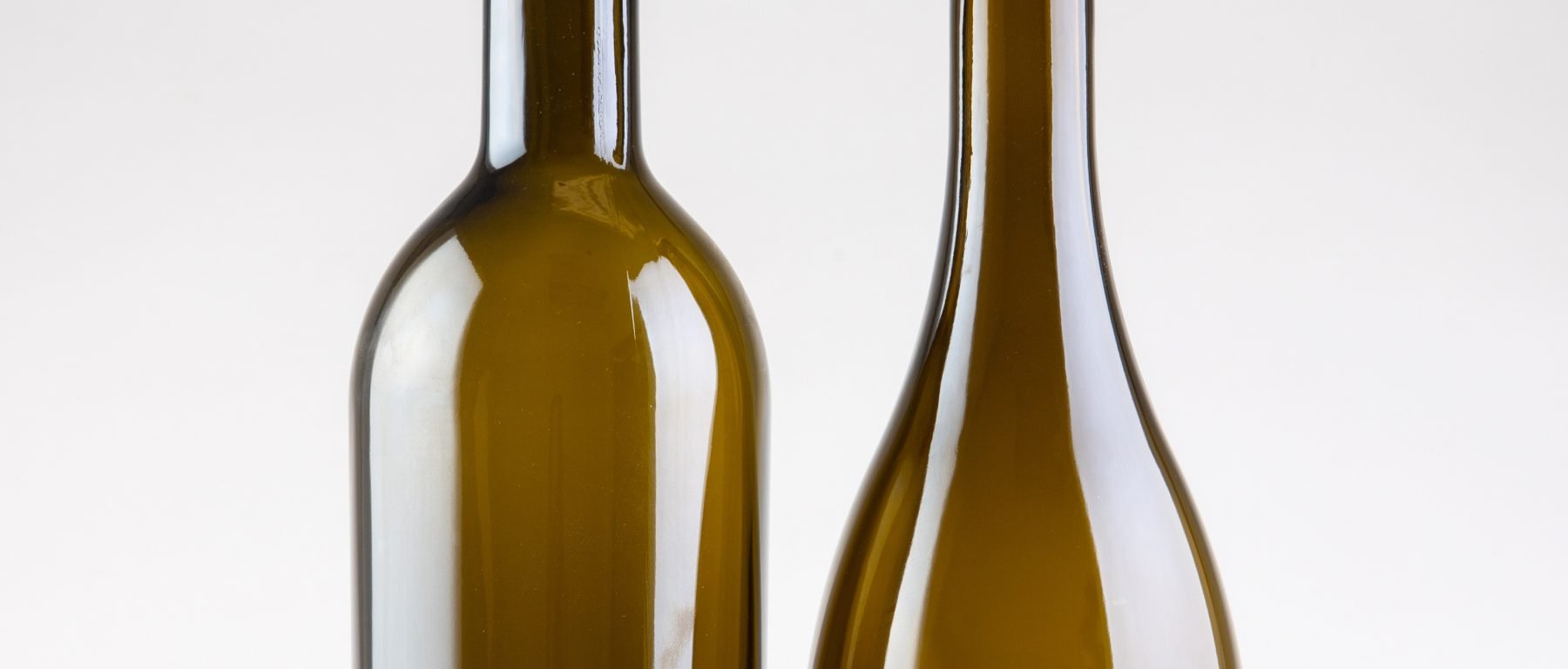
Two classic styles of shoulders used today are the Bordeaux and Burgundy bottle styles, pictured above.
Neck
The neck is the slender segment of the bottle and frequently gives way to a lip, a widened rim around the mouth from which the wine is poured. The neck may be enveloped in a capsule, a metal wrapping that extends from the neck over the bottle’s closure – either a cork or a screw cap. The narrow neck minimizes the potential for oxygen transfer with the surroundings.
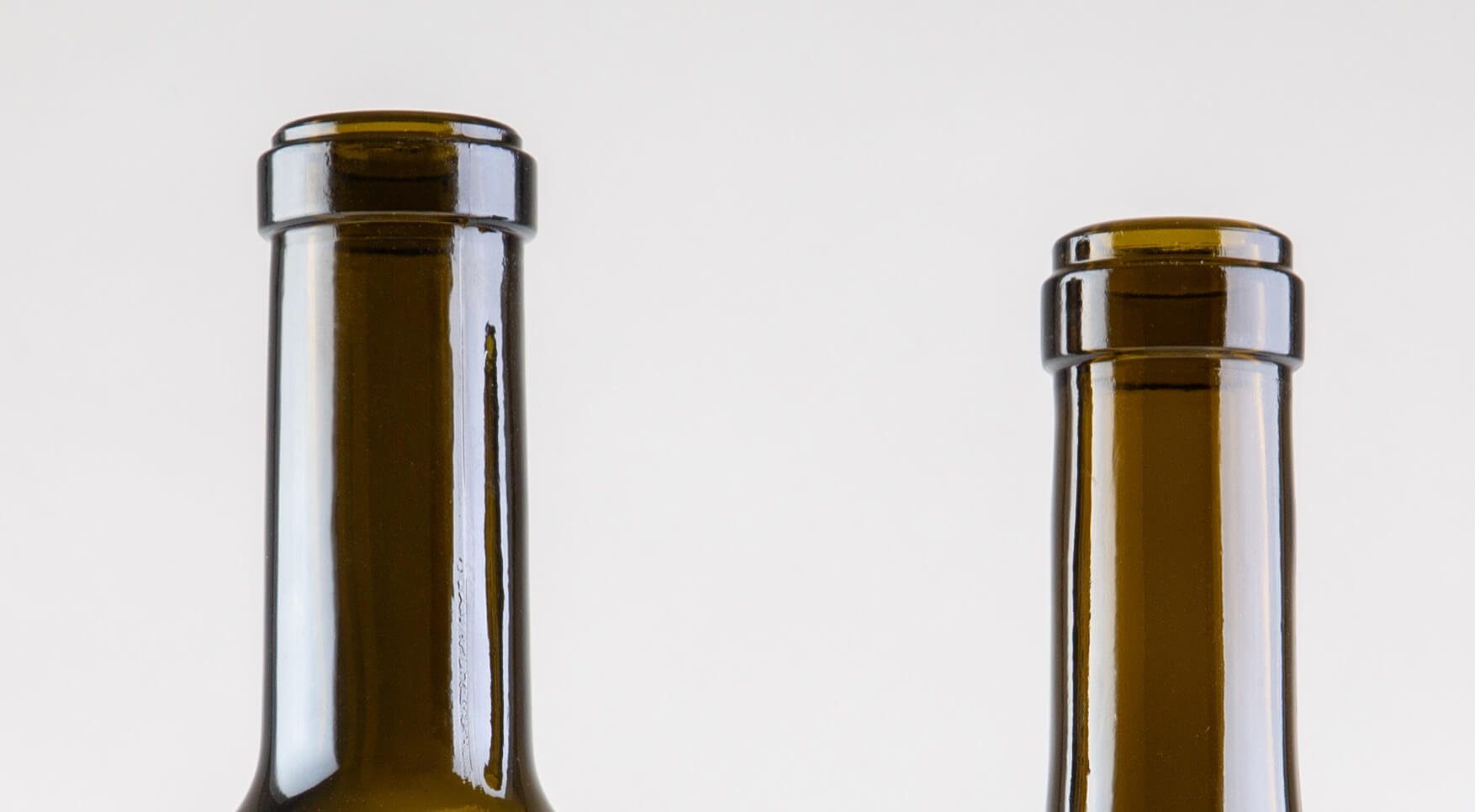
A particularly important consideration is where the inside diameter of the bottle neck begins to flare outward. This shall be considered with regard to cork pressure on the sides of the glass. Bordeaux and Burgundy bottles sometimes flare out at differing rates.
Both the top and the inside of the neck serve critical, technical roles in corked wine bottles. The top of the bottle contacts the corking machine and is integral in creating the vacuum seal. The inside of the neck flares where the shoulder starts. The cork and neck length must be properly aligned, so the neck does not flare before the end of the cork. Imperfections here can lead to an inadequate seal (Berlin Packaging, 2015).
Bead
The bead is the outcropping of glass near the top of the neck. This widened rim not only plays an aesthetic role but provides rigidity and structural support to an area of the bottle that is in frequent contact with bottling machinery. Bottles with larger beads may require thicker foil material to envelop the bead without tearing. The bead on a wine bottle may also sometimes be referred to as a transfer bead (Berlin Packaging, 2015).
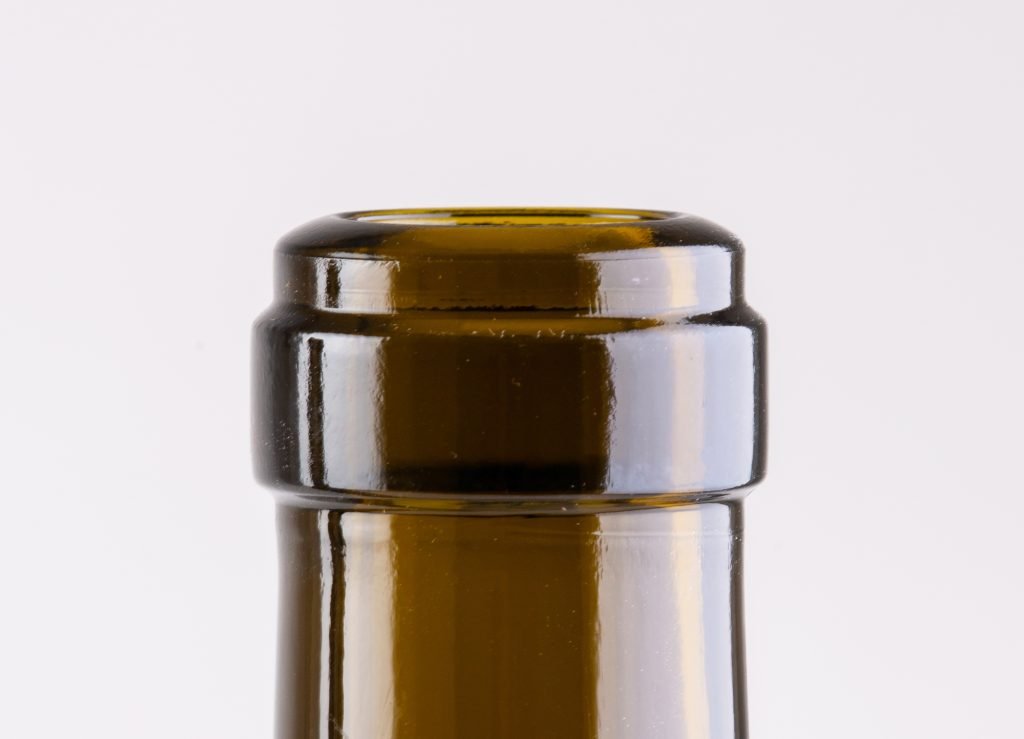
The bead: An outcropping of glass near the top of the neck.
The anatomy of a wine bottle is a testament to the meticulous attention to detail, from the base to the closure, ensuring a harmonious and captivating experience with each pour.
Literature cited
Hu, W. (2022). Knurls and Bearing Surface Stress Analysis. Glass Worldwide, 102.
American Glass Research: Glass Container Knurling Study
A History of the Wine Bottle:
https://www.restaurantbusinessonline.com/history-wine-bottle
Bottleneck / Cork History:
https://pubs.acs.org/doi/10.1021/acs.jafc.6b02465
National Wine School (2023). Reading Wine Labels lecture in Level One Sommelier Course.
IWSC (2025). Georgian Qvevri: How 8000 Years of Winemaking Tradition Shapes Modern Georgia. https://www.iwsc.net/news/iwsc/georgian-qvevri-how-8000-years-of-winemaking-tradition-still-shapes-modern-georgia
World History Encyclopedia. Amphora. https://www.worldhistory.org/amphora/
VinePair (2016). The First Wine Label Was Invented in Egypt. https://vinepair.com/wine-blog/the-first-wine-label-was-invented-in-egypt/
Indelible Wine Stain (2024). The Fascinating Evolution of Wine Bottles. https://www.indeliblewinestain.com/p/the-fascinating-evolution-of-wine
Word on the Grapevine (2022). Cork in Winemaking: History, Production, Taint and Diam. https://wordonthegrapevine.co.uk/cork-winemaking-taint-diam/
Punch Drink (2016). A Guide to Wine Bottle Design. https://punchdrink.com/articles/guide-to-wine-bottles-design/
The Manual (2023). Wine Bottles and the Punt. https://www.themanual.com/food-and-drink/wine-bottle-punt-explanation/
VinePair (2019). Why Wine Bottles Come In Different Shapes. https://vinepair.com/wine-blog/why-wine-bottles-come-in-different-shapes/
Berlin Packaging (2015). Anatomy of a Bottle from Top to Bottom. https://www.berlinpackaging.com/anatomy-of-a-bottle/


